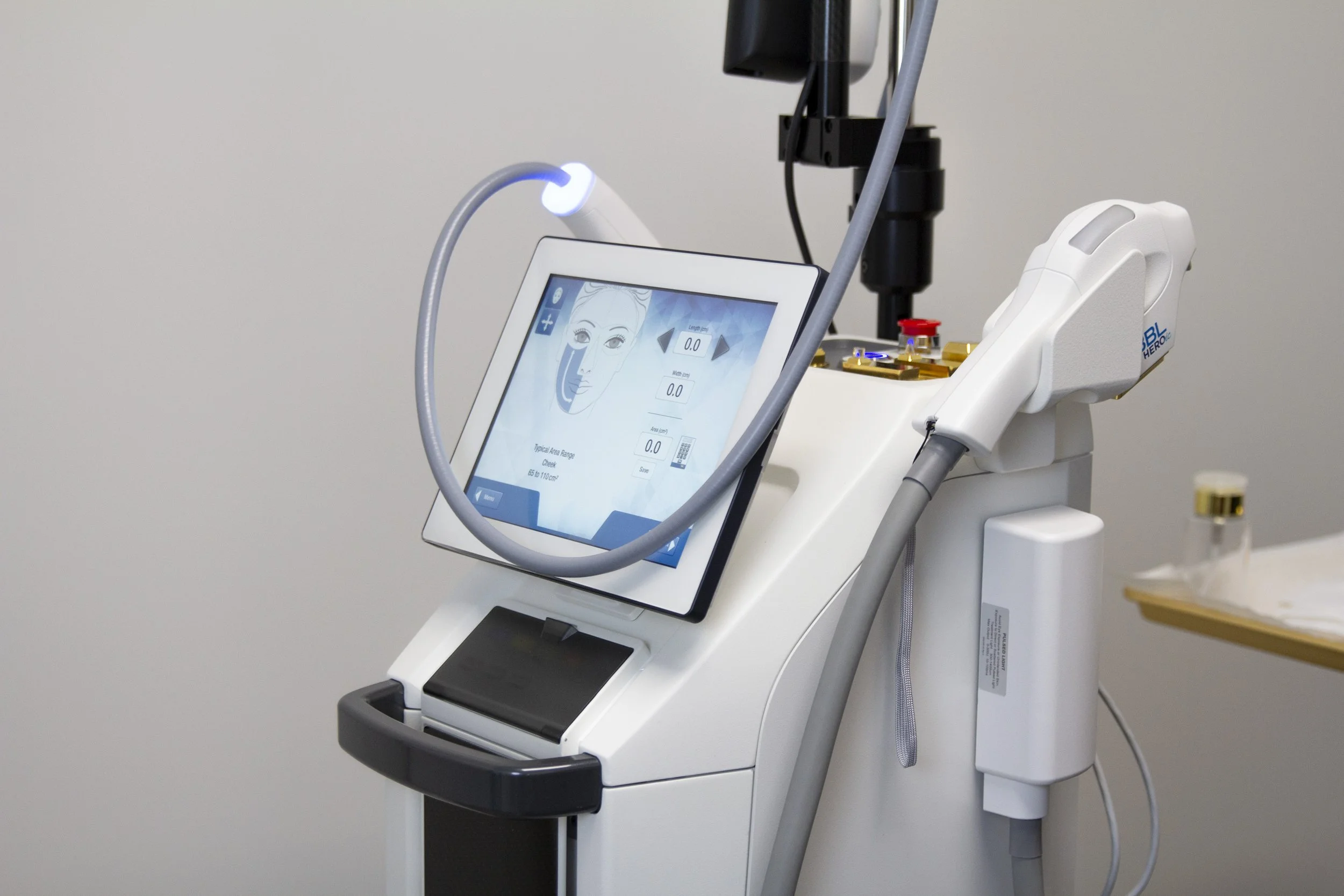
You searched for an IPL photofacial and landed on a clinic offering something called BBL HEROic. Reasonable question: is that the same treatment under a different name, or did you find the wrong page?
Close to the same family, not the same thing. IPL is the category. BBL is one manufacturer's newer version of it, and BBL HEROic is the current top of that line. If you understand the difference you will stop comparing prices between two things that are not equivalent, which is the mistake most people make when shopping for this.
What is an IPL photofacial?
IPL stands for intense pulsed light. It is not a laser. A laser fires one wavelength; IPL fires a broad spectrum of light across many wavelengths at once, and filters narrow that spectrum toward whatever you are targeting.
The light gets absorbed by color in the skin. Brown pigment absorbs it and breaks apart. Red blood vessels absorb it and collapse. Your body clears the debris over the following week or two, and what is left is more even tone.
That is why photofacials are the standard answer for sun damage, brown spots, rosacea, facial redness, and broken capillaries. They target color, not texture. If your complaint is wrinkles or rough skin, this is the wrong tool and you want MOXI laser resurfacing instead.
So what makes BBL different?
BBL means BroadBand Light, Sciton's platform in this category. It works on the same principle as IPL and it is generally described as the next-generation evolution of it.
The differences are in the engineering, and they show up in the treatment rather than on paper.
Tighter control over the light. Precision filters let the provider aim the output at pigment or at vascular targets more specifically, instead of hitting everything in range at one broad setting.
Consistency across the pulse. Older IPL systems can deliver uneven energy across a pulse, which is where hot spots come from. Better regulation means more even treatment and fewer surprises.
Speed. The HEROic platform is the fastest and most powerful of the BBL line, which matters practically: active treatment runs 15 to 30 minutes in a 30 to 45 minute appointment. Faster passes also mean less time on your skin for the same result.
Cooling built into the handpiece. The sapphire plate is chilled, so it protects the surface of your skin while the energy goes where it needs to go. That is most of why BBL is tolerable without heavy numbing.
None of this makes generic IPL a bad treatment. A well-maintained IPL system in experienced hands does good work. But when you are comparing a quote for a photofacial at one clinic against BBL HEROic at another, you are not comparing identical treatments, and the device and the provider both belong in the comparison.
How to choose between them
The honest answer is that the device matters less than three other things.
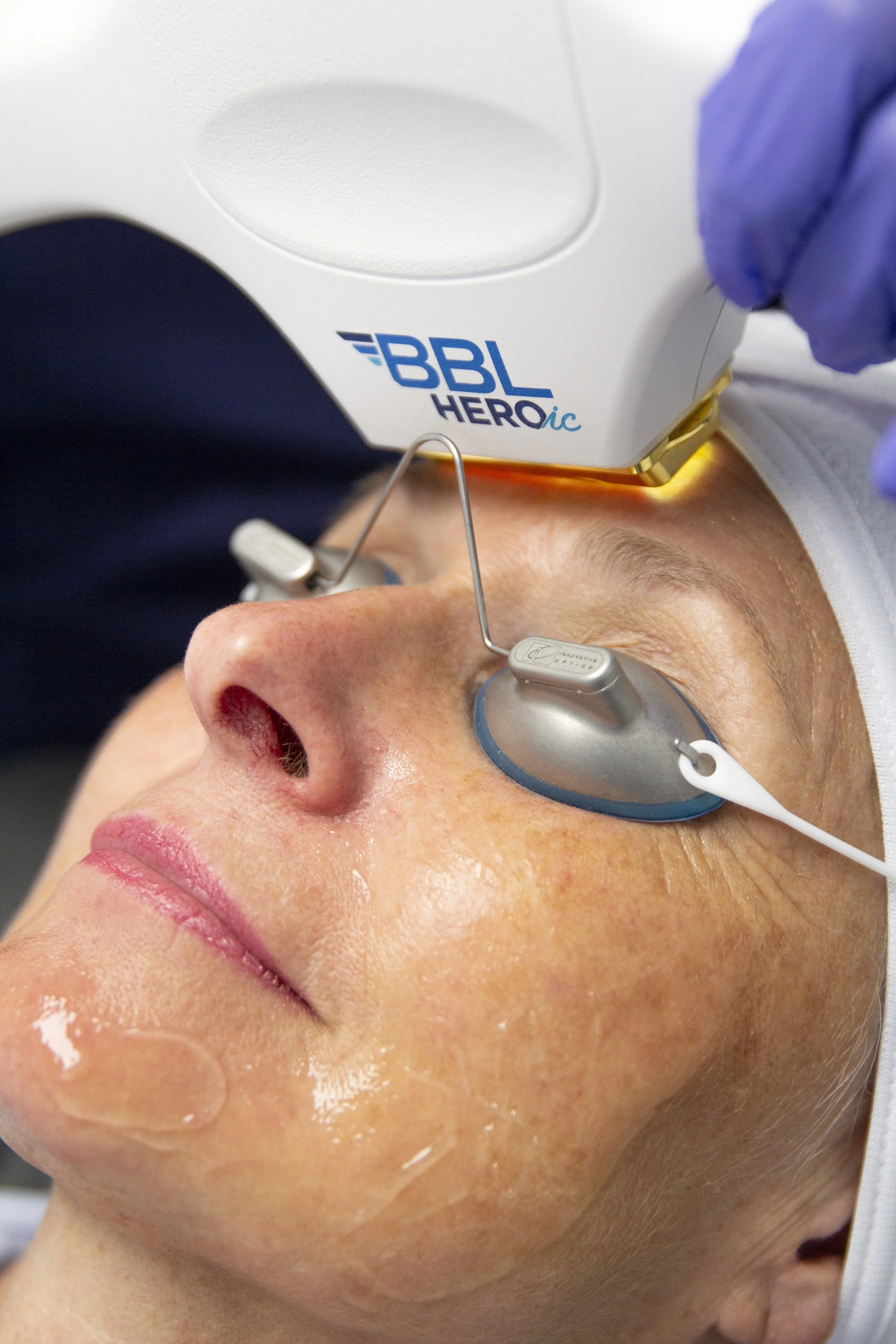
What are you treating? Brown spots, sun damage, redness, rosacea, and broken capillaries all respond to broadband light. Active acne has its own protocol, Forever Clear BBL, which uses blue and yellow light rather than the standard photofacial settings. Laxity has another one, SkinTyte, which heats deeper tissue to firm rather than targeting color. Same platform, three different jobs, so ask which protocol you are actually being booked for.
Who is holding the handpiece? Settings are the treatment. A provider who evaluates your skin type and adjusts across your series will outperform a better device run at a default setting. This matters more for medium and deeper skin tones, where light-based treatments need genuine care to avoid provoking pigment.
Are you committing to the series? Three to six treatments spaced about four weeks apart is what full results take, then one or two a year to hold them. One photofacial gives you a glimpse. It does not give you the outcome.
If you are weighing a photofacial against resurfacing rather than against another photofacial, our breakdown of MOXI vs BBL draws that line, and it is common to run both across one cool-season stretch.
What recovery looks like
Straightforward, and worth knowing before you book.
The first 24 hours you look mildly sunburned: warm, pink, maybe slightly puffy. That settles.
Then for five to seven days your brown spots get darker before they get lighter. They turn into small dark specks that look like coffee grounds, then flake off. This is the treatment working, and it is also why people panic on day two. Do not pick at them. Let them shed on their own, the same rule that applies to every pigment treatment.
SPF 30 or higher daily, and stay out of direct sun for two weeks on either side of each session. Which brings up the season.
Why this is a cool-weather treatment
Sun is the whole scheduling constraint. Light-based treatments work by targeting pigment, so treating recently tanned skin means the laser cannot distinguish your spots from the rest of your face, and it raises the risk of provoking the exact pigmentation you came in to clear.
You also need to protect the treated skin for two weeks after each visit. That is a losing fight in July and an easy one in October.
Then the arithmetic. A three-to-six session course at four-week spacing runs three to six months. Start in October and you are working through the low-sun months, finishing with clearer, more even tone in late winter. Our post on age spot removal covers what to expect from pigment treatments generally.
Frequently asked questions
Is BBL the same as an IPL photofacial?
Not quite. IPL is the broad category of intense pulsed light treatments. BBL, or BroadBand Light, is Sciton's platform in that category and is generally described as a next-generation evolution of IPL, with tighter filtering, more consistent energy delivery, and built-in cooling. Same principle, different engineering.
Which is better, IPL or BBL?
BBL is a more refined version of the technology, but the protocol chosen and the provider's skill with the settings matter more than the badge on the machine. A well-run IPL beats a poorly-run BBL every time.
How much does an IPL photofacial cost?
It depends on the treated area, the protocol, and whether you buy a single session or the series. We quote pricing at your consultation once we know what your skin needs. Call (918) 212-5732 for current rates.
How many photofacial sessions do I need?
Three to six treatments spaced about four weeks apart for full results, then one or two sessions a year to maintain them.
What is the downtime after a photofacial?
About 24 hours of mild redness, then five to seven days where treated brown spots darken into small specks and flake off. Most people work through it. Do not pick at the specks.
Will a photofacial help wrinkles?
Not directly. Broadband light targets color, so it is the right treatment for brown spots, sun damage, and redness. For fine lines and texture you want a resurfacing laser like MOXI.
Can I get a photofacial with darker skin?
It requires real care. Light-based treatments target pigment, so deeper skin tones need conservative settings and an experienced provider. We will assess your skin type at the consultation and tell you honestly whether this is the right treatment for you.
Find out which one your skin needs
Book a consultation and we will look at what is actually on your skin, whether it is pigment, vascular redness, acne, or laxity, and tell you which protocol fits and how many sessions to plan for. If it turns out light is not the right answer for your concern, we will say that too.
Call us at (918) 212-5732 or book your consultation online. Our full treatment menu is worth a look if you are weighing options.