Laser Skin Resurfacing in Owasso: MOXI vs CO2 for Fall
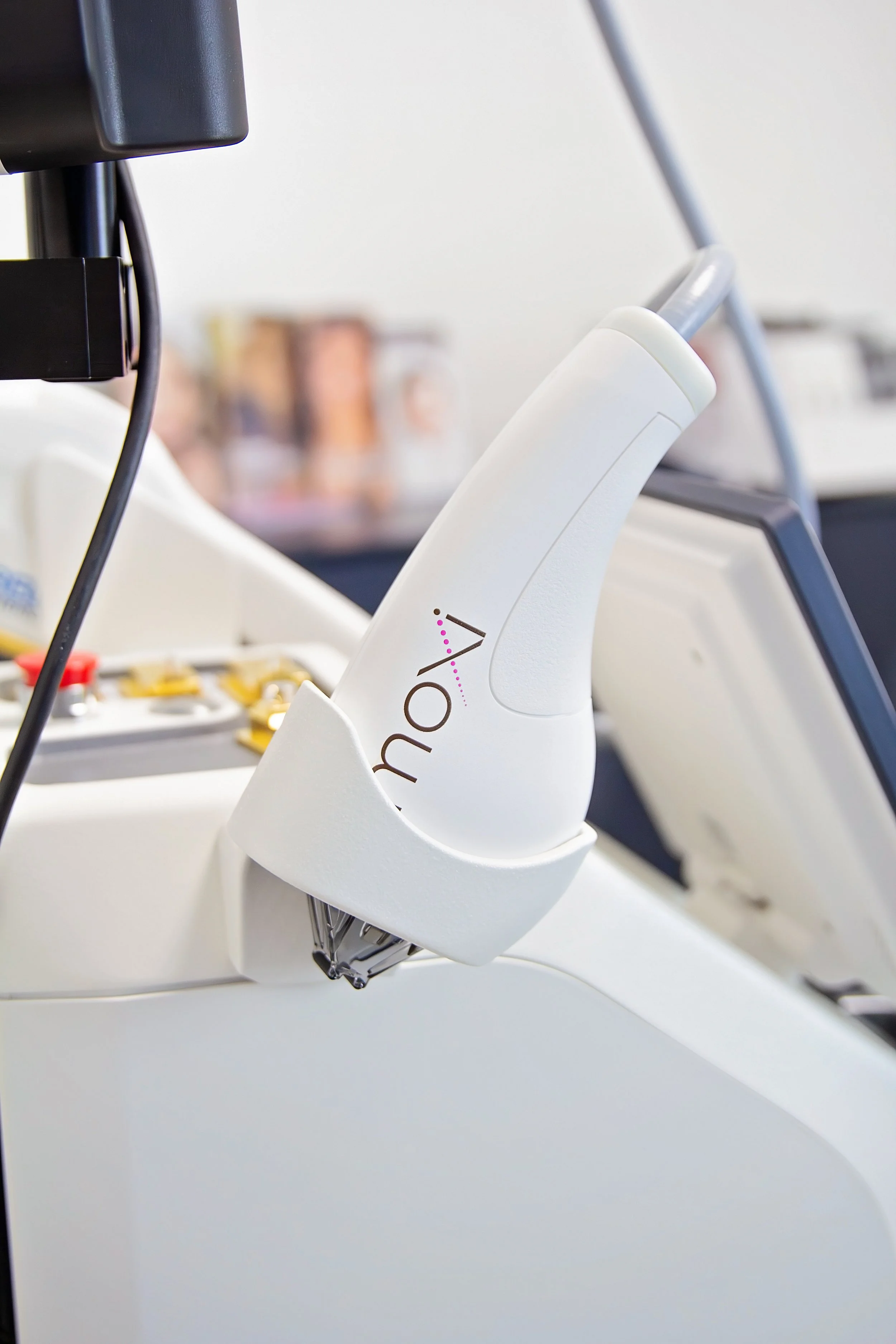
If you have been researching laser skin resurfacing, you have probably run into two very different answers. One camp says MOXI. The other says CO2. They are not the same treatment, they are not for the same person, and the gap between them is mostly about how much downtime you are willing to take.
The short version: CO2 is the heavy option, it removes the surface of the skin, delivers the biggest change in one go, and costs you a week or more of real recovery. MOXI is the gentle option: it works underneath the surface, asks for a few days of dry, flaky skin, and builds results across a short series. At Revamped we run MOXI laser treatment, and for most of the people who walk in asking about resurfacing, that is the honest recommendation.
Fall is when this question comes up, and for good reason. Every resurfacing laser leaves your skin sun-sensitive while it heals, so the months when you are covered up and out of direct sun are the months to do it.
What does laser skin resurfacing actually do?
Resurfacing lasers create controlled injury in the skin so your body rebuilds it. That is the whole mechanism. You trade a short healing window for new collagen, more even tone, and smoother texture.
Where lasers split is how deep they go and whether they remove tissue on the way.
Ablative lasers vaporize the outer layer of skin. CO2 is the best known one. You are healing an open wound, which is why the recovery is serious and why the results are dramatic.
Non-ablative lasers pass through the surface and heat the tissue underneath, leaving the top layer intact. MOXI is in this group. The surface stays sealed, so you flake instead of scabbing.
Both stimulate collagen. One does it with a sledgehammer and one does it with a series of taps.
How MOXI works
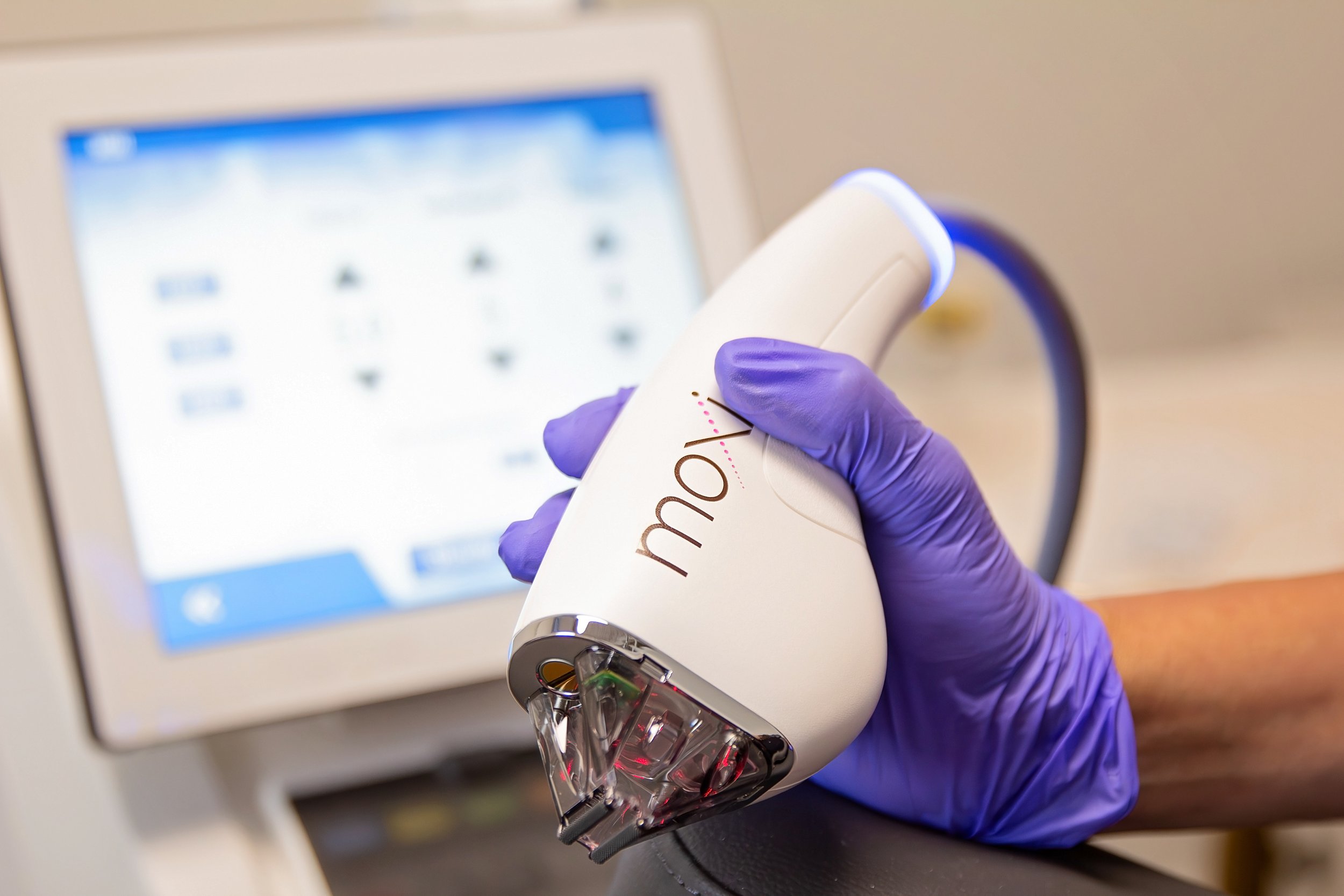
MOXI is a 1927nm thulium fiber laser from Sciton. It puts fractional energy into the skin, meaning it treats microscopic columns and leaves healthy tissue in between them to speed up healing.
It handles the things most people are actually bothered by: sun damage and brown spots, dull tone, rough texture, fine lines, and mild melasma. Active treatment takes 15 to 20 minutes, and the appointment runs 30 to 45 minutes with numbing.
Recovery goes like this. Day zero you look warm and pink. Days one and two the redness fades and you can see tiny dots across the treated area, which are the microscopic columns doing their job. Days three to five your skin feels like fine sandpaper as the old surface sheds. By day seven to fourteen the new skin is through and the brightness shows up.
Most people are back to their normal skincare in five to seven days. You are not hiding from anyone for two weeks.
The catch is that one session is not the whole story. Plan on two to four treatments spaced about four weeks apart for a full course, then one or two a year to hold it.
How CO2 compares
A fractional CO2 laser goes deeper and takes the surface with it. That is why it is the answer for deep wrinkles, significant textural scarring, and heavily photo-damaged skin that has passed the point where a gentler laser will move the needle.
What you pay for that is time. Expect roughly a week to ten days of visible healing, with oozing and crusting in the early days, a strict ointment-and-no-makeup protocol, and redness that can linger for weeks or a couple of months. Most people take time off work. CO2 also carries a higher risk of pigment changes, which matters more for medium and deeper skin tones, and it is typically performed at a plastic surgery or dermatology practice with a deeper level of sedation or numbing.
Fully ablative CO2 is not something we perform at Revamped. If your skin genuinely needs it, we will tell you that and point you in the right direction, because sending you home with the wrong treatment helps nobody.
Which one should you book?
Answer three questions and it usually sorts itself out.
How much downtime can you actually give this? If you can hand over a week and a half and stay home, CO2 is on the table. If you need to be at work on Monday looking normal, you want MOXI.
What are you trying to fix? Brown spots, dullness, sun damage, rough texture, and fine lines all respond well to MOXI. Deep static wrinkles and significant scarring are a different job.
Is this a one-shot or a maintenance plan? CO2 is built as a single big event. MOXI is built as a series you repeat lightly over years, which suits most people better and is far easier to schedule around real life.
There is a fourth option worth naming. If your main complaint is redness, broken capillaries, or brown spots rather than texture, a light-based treatment may serve you better than either laser. BBL HEROic targets pigment and vascular concerns specifically, and it is common to run BBL and MOXI together in the same season. Our breakdown of MOXI vs BBL covers where the line sits.
Why fall is the window
Sun is the variable that decides how resurfacing goes. Fresh laser-treated skin has no defenses, and pigment that gets provoked while healing can stick around for months.
The guidance for MOXI is to stay out of direct sun for one to two weeks before and after each session, with SPF 30 or higher daily after that. Try holding that line in an Oklahoma July. In October and November it happens on its own.
The other reason is arithmetic. A two-to-four session MOXI course spaced four weeks apart runs two to four months. Start in October and you are finished before the holidays, with the brightest result landing right when the photos start.
What to do between sessions
SPF 30 or higher, every day, no exceptions. This is the single thing that protects your investment. Skipping it undoes the work.
Leave the flaking alone. Days three to five your skin sheds. Let it. Picking at it is how you turn a smooth result into a pigmented one.
Pause your actives. Retinoids, acids, and scrubs come out of the routine for the window your provider gives you, then go back in.
Stack the right treatments, not all of them. A VI chemical peel or a hydrating facial can pair well across a resurfacing season, but the sequencing matters. Ask before you book them back to back.
Frequently asked questions
Is MOXI or CO2 better for laser skin resurfacing?
Neither is better across the board. CO2 delivers more change in one session and costs you a week or more of real recovery. MOXI delivers gradual change across a short series with about five to seven days of flaking. For sun damage, uneven tone, and fine lines, MOXI is usually the right call.
How much does laser skin resurfacing cost?
It depends on the device, the treated area, and whether you are buying a single session or a series. We quote MOXI pricing during your consultation once we know what your skin needs, so you are not guessing from a number that does not apply to you.
How long is the downtime for MOXI laser?
About 24 hours of mild redness, then three to five days of dry, sandpaper-textured skin as the old surface sheds. Most people are back to their normal skincare routine in five to seven days.
How many MOXI sessions do I need?
Two to four sessions spaced roughly four weeks apart for an initial course, then one or two a year to maintain it.
Can I get laser resurfacing in the summer?
You can, but fall and winter are safer and more practical. Treated skin needs to stay out of direct sun for one to two weeks on either side of each session, which is far easier in the cooler months.
Does Revamped offer CO2 laser resurfacing?
We offer MOXI, which is a non-ablative fractional laser, along with BBL HEROic for pigment and redness. If your skin truly needs fully ablative CO2, we will say so during your consultation.
Start your resurfacing season now
October is the month to get this on the calendar. Book a consultation and we will look at your tone, texture, and history, tell you plainly whether MOXI is the right tool, and map out how many sessions it will take to get where you want to be. If you want to see the full range first, our treatment menu lays it out.
Call us at (918) 212-5732 or book your consultation online.